How can a small consulting firm compete with bigger firms?
A small firm cannot match a famous name, but it can show proof a client can check. A guide for small consulting firms, with a short video.
A small consulting firm cannot outspend a famous name, but it can show proof the client can check. Put verified feedback on the people who will do the work into the offer, and let the client confirm it themselves. The big firm sells its brand. The small firm can sell its results.
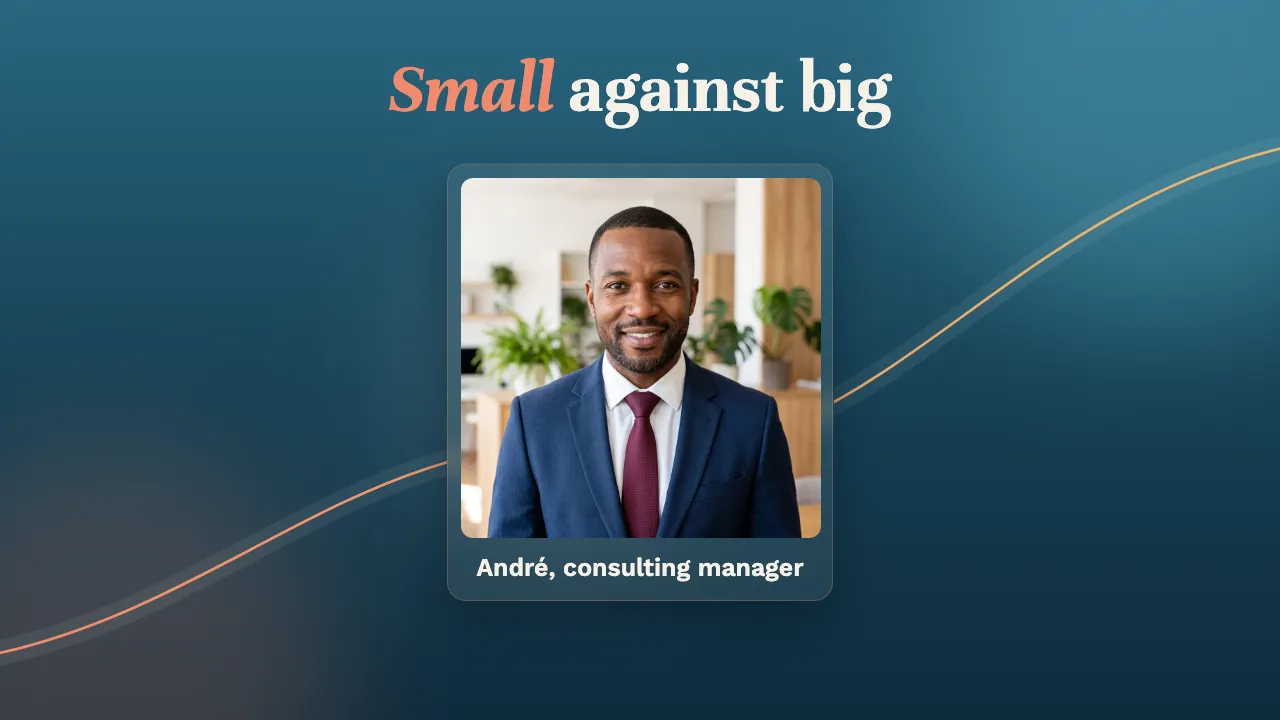
In the video, André runs a small consulting firm called Wrenfield. He is about to send an offer, and he knows the competitors are bigger and better known. He cannot change that. So he changes what the client gets to see.
Why do clients pick the bigger, better-known firm?
Because a known name feels like less risk. The person who buys consulting has to defend the choice. If the famous firm fails, it looks like bad luck. If an unknown firm fails, it looks like a bad decision.
That means the client is not only comparing price and skill. They are comparing how safe each option feels. A large firm has logos, case studies and a reputation that does the talking. A small firm often has none of that in the offer, even when its people are better.
The answer is not to pretend to be big. It is to lower the risk in a way the big firm rarely bothers to, with evidence about the actual people.
What can a small firm show that a big firm does not?
Results tied to named people, from real clients, that anyone can check. A big firm’s brand says something about the firm. It says little about the consultant who will turn up on Monday.
A small firm can be specific. These are the people you will work with. This is what earlier clients scored them. This is how many answers the scores are based on, and this is when the latest answer came in. That is information a client can use.
It also plays to the strengths of a small team. Fewer layers, closer contact and consultants who know their clients by name. Verified feedback makes those strengths visible instead of leaving them as claims in a sales text.
Why is a testimonial not enough?
Because the client knows you chose it. A quote on a slide is the best thing one client ever said. The reader has no idea what the other clients thought, or whether the quote is from last month or five years ago.
Proof gets stronger when it is hard to edit. A Journey Card covers an interval of surveys. When you select two surveys of the same type, the card shows the responses of all surveys in between, so it is difficult to pick only the good ones. It also shows the number of answers and the date of the latest answer. A card with many recent answers says more than a card with a few old ones.
For a deeper look at testimonials and other ways to show proof, read Feedback Journey compared with testimonial tools.
How does a client check the proof?
With the QR code on the card. The card includes a QR code that links to the card on the Feedback Journey website. Anyone can use it to check that an image of the card in an offer document, a CV or another printed document is genuine.
In the video, the client scans the code while André sits calmly and watches. He has nothing to hide. That calm is part of the message. A firm that invites the client to check its numbers is a firm that trusts its numbers.
The client does not need an account or a meeting to do this. They can check the card on their own time, which matters when they are comparing several offers side by side.
Should every consultant in the offer add a card?
Only those who choose to. In Feedback Journey, users own their data and choose when and where to create a Journey Card. A firm can encourage it, but it should not force it.
In the video, each consultant chooses to add a card. That choice matters for two reasons. It keeps the feedback personal, so people keep asking for it honestly. And a card someone chose to share says more than one they were told to hand over.
Consultants who are new, or who have few answers yet, can start collecting now. After a few rounds of surveys, they will have a card worth showing too.
What should the card show for the work you are bidding on?
Results from the same kind of work. Each survey type in Feedback Journey has four fixed categories, and a card shows the average score for each of them.
André’s card in the video comes from courses and workshops. The Workshops and courses survey scores four things.
- Subject knowledge. How well the person knows the subject that was presented.
- Engaging. How engaging the person is to listen to, and whether participants could take part actively.
- Relevance. How relevant and useful the content was to the participants’ needs.
- Satisfaction. The overall satisfaction with the course or workshop.
The example card shows Subject knowledge 9.0, Engaging 8.8, Relevance 8.4 and Satisfaction 8.6, from 64 answers. These are strong, believable numbers. They are not all 10, and that is exactly why a client can trust them.
How do you put proof into an offer?
- Start collecting feedback early. Proof takes time to build. Ask after every project or workshop with the same short survey.
- Add the cards next to the people. Put each card in the section that presents the consultant, not in an appendix nobody reads.
- Tell the client they can check it. One sentence is enough. “Scan the QR code to verify the scores.”
- Keep the cards fresh. A recent latest answer and a growing number of answers make the card more valuable over time.
For a guide on winning a single client who has never met you, read how do you win a client who has never met you.
What is the difference between brand and proof?
A brand asks the client to trust a name. Proof lets the client check for themselves. André puts it in one line at the end of the video: “They have the brand. We have the proof.”
A small team will rarely win the brand contest. It does not have to. When the offer shows real results on the real people, with a way to verify them, the client has a reason to choose the smaller firm that goes beyond price.
What happens in the video?
The video is under a minute long. The text on screen tells the story, so it works without sound. The people in it are fictional, and the video is AI-generated. Here it is as text, in the order it plays.
- Title card. “Small against big.” André, a consulting manager, is introduced.
- The competitors. On screen, “The competitors are bigger and better known.” André sits alone with a few sheets of paper and thinks.
- A consultant shows a card. On screen, “Each consultant chooses to add a card.” A colleague shows André something on a sheet of paper. An example Journey Card, labelled “Example”, shows Subject knowledge 9.0, Engaging 8.8, Relevance 8.4 and Satisfaction 8.6, from 64 answers, with the latest answer on 21 Oct 2026.
- The offer. On screen, “The offer goes out with the cards.” André sends the offer from his laptop and leans back.
- The client checks. On screen, “The client scans the QR code.” The client, seen from behind, scans the code on the card while André watches. The same example card is shown.
- How a small team shows proof. An infographic shows three steps. Each consultant chooses to add a card. Four scores from real surveys, on Subject knowledge, Engaging, Relevance and Satisfaction. Anyone can check it with the QR code.
- Proof anyone can check. On screen, “Proof anyone can check.” André says, “They have the brand. We have the proof.”
- End card. “Small team. Verifiable results.” The card shows feedbackjourney.com and the note “AI-generated. Fictional characters.”
Frequently asked questions
Try it with your next client
Create your first client survey in the Feedback Journey app, or read more guides on collecting honest feedback.